The Church of Mar Mikha in Alqosh
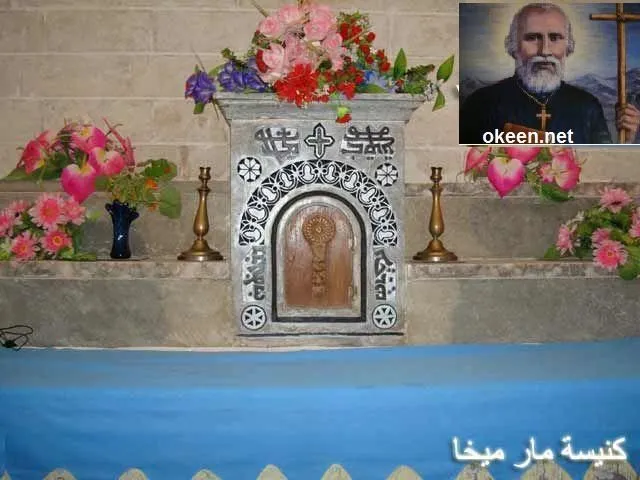
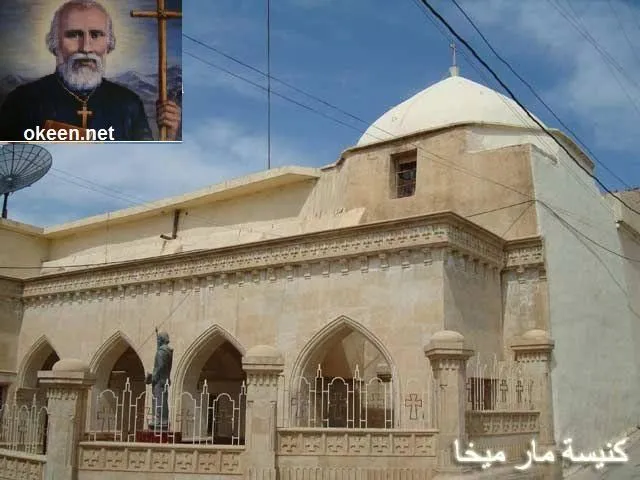
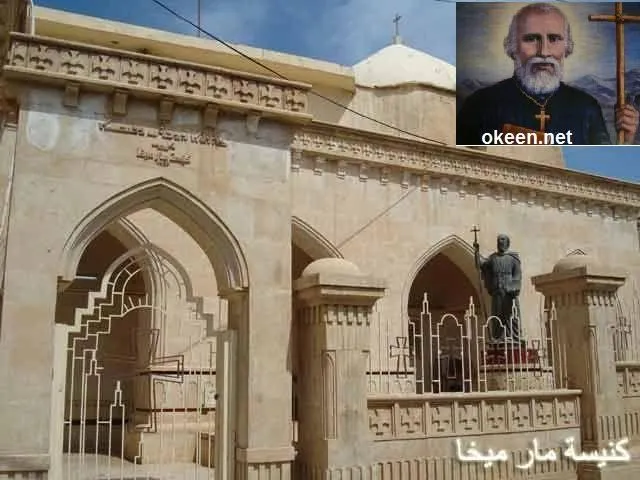
The Church of Mar Mikha of Nuhadra is one of the oldest buildings still standing in the old town of Alqosh, and among its proudest monuments of architecture and civilization. It was built in the lifetime of Mar Mikha himself, when he came to this village and settled there in 414. He was born in the village of Banuhadra (today’s Dohuk) in 309, which then belonged to Ma’altha.
In 415 Mar Mikha built a monastery and church with the help of the villagers. The existence of a monastery alongside the church is confirmed by the fact that in 1811 Anba Gabriel Dambo (1757–1832), regarded as the renewer of monasticism among the Chaldeans, made the monastery the seat for himself and his monks after they were expelled from the Monastery of Rabban Hormizd by the governor of Amadiya.
The Church and the Tomb of Mar Mikha
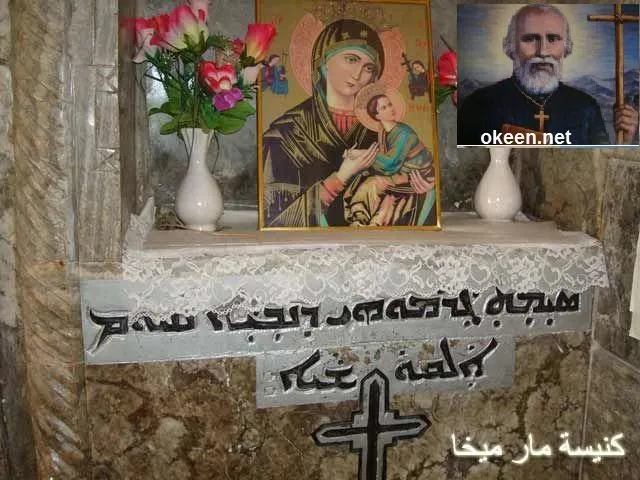
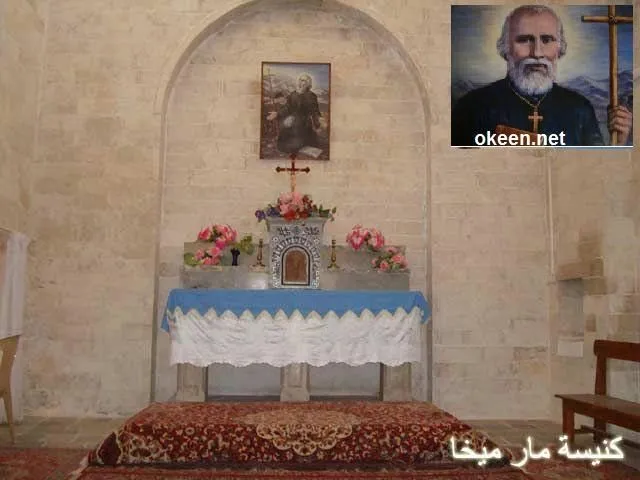
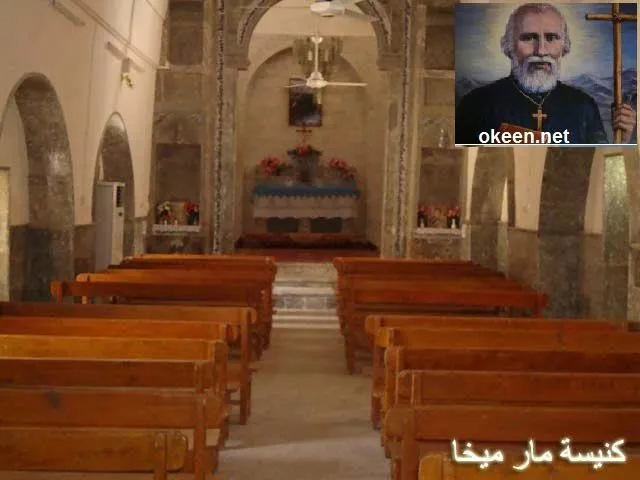
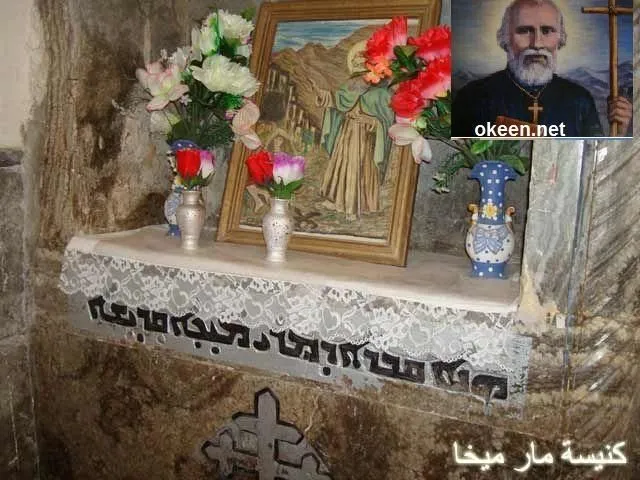
The church once had three sanctuaries; two were removed because they had collapsed and could not be restored. The church was last renewed in 1876, as recorded on a stone tablet above the niche of Mar Mikha’s tomb, to the right of the altar. Another niche on the left side holds the burial of a relic of the Prophet Nahum of Alqosh, inscribed in Syriac “Treasury of the bones of the Prophet Nahum.” This was confirmed in 1987 when Father Yohanna Jolagh, with the Church’s permission, opened the niche and found a collection of bones inside a box, which were returned to their place as they had been, according to Emmanuel Qiyablo’s book Mar Mikha of Nuhadra (1988).
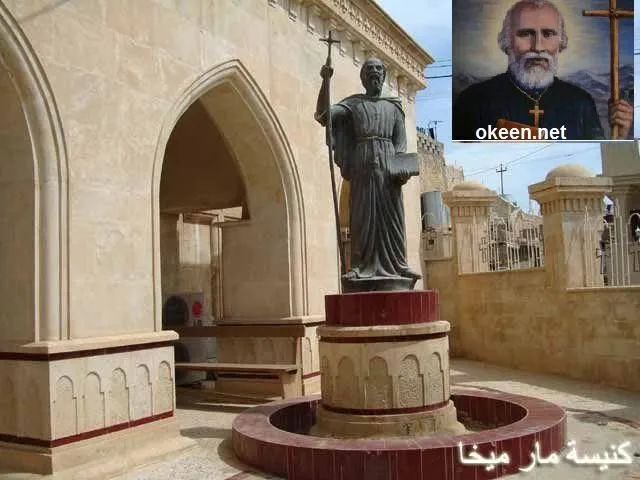
The present church has a single nave, 20.5 m long, 7.5 m wide, with walls 7.5 m high. At the eastern end, above the altar, rises a large dome faced outside with dressed stone, as shown in the plans of the foundations of the church and school. The Church and School of Mar Mikha lie north of the Church of Mar Giwargis, and the school adjoins the north side of the church directly to the east.
The School of Mar Mikha
This school building was erected in 1923, a historical continuation of the School of Mar Mikha that he founded when he settled in the village. In former times, and until the first quarter of the twentieth century, it was a center of light and thought for every kind of science and knowledge, alongside Christian religious learning and the Syriac language. Giants of Syriac language and literature graduated from this ancient school, as well as great clergy of the Eastern Church in earlier times and of the Western Church later; it was a beacon for the generations and for religious formation from childhood.
Some left a great literary and manuscript legacy and are still remembered with pride and honor by later generations: the great writer Father Israel Rabi Raba (of the Shikwana family, 1540–1611), the earliest writer and renewer of this school; Father Damianos Kondira, who died in 1855; Metropolitan Timotheos Maqdasi (1847–1925); Giwargis of Alqosh, who lived in the seventeenth century (History of the Christians in Iraq, p. 147); Metropolitan Thomas Audo (1855–1915); and others accomplished in language, literature and philosophy. There were also great Syriac calligraphers who left a wealth of manuscripts now spread across every continent, among them Deacon Paul Qasha (1892–1969), whose manuscript legacy reached 241 manuscripts, 92 of them large and uncatalogued, and before him Ataya of Alqosh and the Homo and Shikwana families.
The Present School Building
The present building of the School of Mar Mikha (formerly the First Primary School of Alqosh) has six consecutive rooms forming a right angle open to the south, with one side running east to west and the other north to south. They are built of stone and gypsum with vaulted roofs. In front of them is a portico 2.70 m wide built on eleven columns of Hallan stone, ending in arches of the same stone. The floor of the rooms and portico is raised about 1.5 m above the school courtyard; the portico is connected to the courtyard by a stone stairway to the south and a similar one to the west, as wide as the portico. The school is walled on all sides.
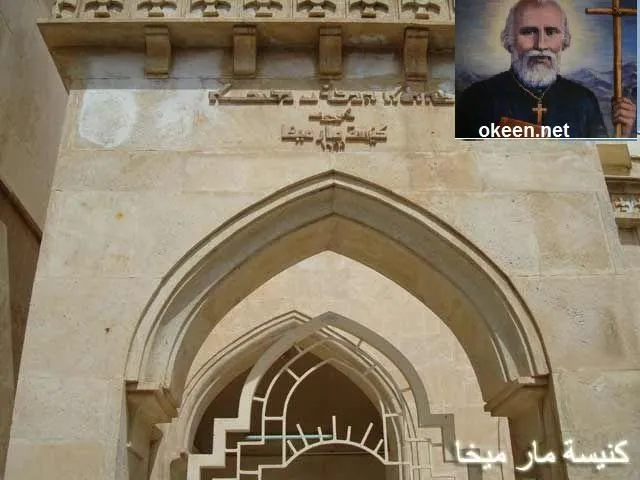
On the west side of the church, directly east of the main entrance of the school, there are two rooms, one on the ground floor and one above it. There is another room on the southeast side of the church, with a small courtyard and a separate door with a stone frame and a recently installed historical tablet in Syriac giving the date this door was built; it is opened on days when prayers are held in the church. These rooms were used as classrooms of the school.
Of the rooms on the north side of the angle, two have been made into a hall for funeral receptions, and the rest are used in summer to teach Christian doctrine and the Syriac language to those who wish to learn, in short courses.
Read also: The life of Mar Mikha of Nuhadra · In the name of Mar Okeen
Sources
- Emmanuel Qiyablo, Mar Mikha of Nuhadra (1988)